Jul. 22, 2026
If you are evaluating a China Shacman Truck Manufacturer, this guide explains how to compare suppliers, verify reliability, and choose a partner that fits your market, budget, and after-sales needs.
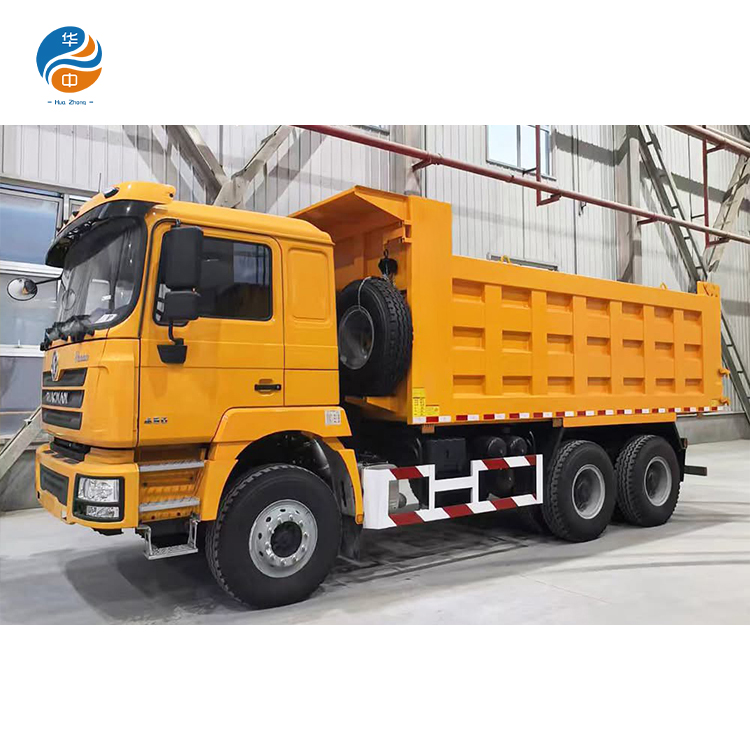
A reliable China Shacman truck manufacturer is one that matches your market’s payload, terrain, service network, and export support, while also proving compliance, parts availability, and transparent pricing. For fleet buyers and importers, the real decision is not only about model selection; it is about total cost of ownership, downtime risk, and whether the supplier can support the truck after arrival.
Huazhong is one example of a company positioned in this sourcing space, and buyers should still verify the same fundamentals: export records, technical configuration, spare-parts plans, warranty terms, and factory documentation. This article focuses on the practical checks that matter for China Shacman truck manufacturer selection, including model fit, technical comparison, compliance, and return on investment.
Before comparing offers, define the operating conditions of the truck. A reliable Shacman truck factory is not simply a seller with a catalog; it should be able to match model configuration to payload, road quality, fuel conditions, and local maintenance capability. For importers, the best choice often depends on whether the truck will run on highways, mining routes, construction sites, or mixed urban logistics. In practical terms, fleet procurement for emerging markets usually fails when buyers focus on unit price instead of uptime, parts access, and export documentation.
When evaluating a commercial vehicle OEM supplier, buyers should compare at least three categories of evidence: technical fit, export competence, and service continuity. Technical fit includes horsepower, axle load rating, wheelbase, and terrain suitability. Export competence includes customs paperwork, packing, certifications, and shipping coordination. Service continuity includes spare-parts response time, warranty terms, and whether after-sales coverage exists in the target market.
A practical China Shacman truck manufacturer checklist should also map each application to a model series. A dump truck for quarry work is not evaluated the same way as a tractor head for long-haul freight, and both are different from a cargo truck for distribution networks. If the manufacturer cannot explain those distinctions clearly, the sourcing risk increases.
Use this evaluation standard before requesting a quotation:
You choose a China Shacman truck manufacturer by checking whether the supplier can prove model suitability, export competence, and service support for your specific market. Start with the truck’s intended load, road conditions, and annual running distance, then compare the manufacturer’s recommended series against those requirements. After that, verify registration documents, factory capability, and spare-parts planning before you place a deposit.
A useful way to structure the review is to separate “what the truck does” from “how the supplier supports it.” The first part is technical: payload, horsepower, axle setup, and terrain ability. The second part is commercial: contract clarity, warranty coverage, lead time, and export compliance. Buyers who evaluate only one of these layers often face downtime, replacement-part delays, or misaligned vehicle specs after import.
The first step is to select the right SHACMAN model series for the job. For highway freight, the priority may be fuel efficiency and stable axle configuration, while for mining or construction work, torque, suspension strength, and ground clearance matter more. For regional distribution, payload efficiency and maintenance simplicity are often more important than maximum horsepower.
Below is a practical decision map for common buyer scenarios. It is not a substitute for engineering data, but it helps narrow the shortlist before commercial negotiation. If a manufacturer cannot align the model to your use case, that is a warning sign.
| Buyer use case | Typical SHACMAN series direction | Priority factors |
|---|---|---|
| Long-haul freight | Tractor head series | Fuel use, cab comfort, highway durability |
| Construction hauling | Heavy dump series | Payload, suspension strength, terrain handling |
| Mining operations | Off-road heavy-duty series | Axle load, torque, chassis durability |
| City logistics | Cargo truck series | Maneuverability, maintenance simplicity, parts access |
A supplier comparison should include payload, horsepower, drivetrain, axle ratio, wheelbase, and terrain suitability. These figures determine whether the truck will hold performance under load or require frequent service interruptions. A buyer running rough roads may prioritize torque and ground clearance, while a highway fleet may place more weight on engine efficiency and transmission matching.
When comparing Shacman truck manufacturer comparison data, ask for configuration sheets rather than marketing summaries. If one supplier offers a 6x4 chassis and another recommends 8x4 for the same hauling task, the difference should be explained with payload math and route conditions. That explanation matters more than general claims because it affects fuel use, tire wear, and maintenance intervals.
Truck export compliance for China suppliers is one of the most important risk-control points for overseas buyers. The supplier should be able to provide export invoice details, packing documents, model identification, and shipping coordination that matches the destination market’s import rules. Missing or inconsistent paperwork can delay clearance and increase storage cost at the port.
A serious China Shacman truck manufacturer should also know whether the target market requires specific certification, right-hand or left-hand drive configuration, emission-related documentation, or local registration papers. Buyers should request these items before payment, not after production starts. This reduces the chance of receiving a truck that is technically correct but commercially unusable in the destination country.
After-sales support for heavy trucks should be treated as a quantifiable procurement item, not a vague promise. Ask how many spare-parts categories are stocked, what the warranty period covers, and how quickly common service items can be replaced. A supplier without a parts plan can turn a low purchase price into a high downtime cost.
For fleet buyers, the most important service question is whether the manufacturer has a repeatable support process. That includes technical guidance, part identification, replacement channels, and response timing after delivery. If the supplier has already worked with importers in your region, ask for evidence of those shipments and the parts support model used for them.
A good buying decision compares purchase price with fuel use, maintenance frequency, tire consumption, and downtime risk. For example, a truck that costs less up front can still produce a higher 3-year cost if it consumes more fuel or waits longer for parts. That is why fleet procurement for emerging markets should always include lifecycle cost, not just invoice cost.
You can use a simple ROI screen before final selection. Estimate annual mileage, expected fuel burn, service intervals, and part replacement frequency, then compare those numbers across models. The supplier that can explain these costs clearly is usually easier to manage after delivery than one that only quotes a unit price.
A reliable Shacman truck factory should be able to show the buyer how orders move from specification to assembly to inspection. Factory documentation may include chassis codes, configuration records, test procedures, and export packing details. If these records are not available, the buyer cannot properly verify what was built.
This is also where a commercial vehicle OEM supplier should demonstrate repeatability. Ask whether the factory can produce the same configuration in multiple lots without changing core components. That matters for fleet standardization because mixed configurations raise service complexity and spare-parts inventory cost.
A reliable China Shacman truck manufacturer is a supplier that can deliver the right model, with the right configuration, to the right market, while supporting export paperwork and after-sales service. Reliability is not measured only by production volume; it is measured by fit, compliance, and continuity after delivery. For a buyer, the key question is whether the supplier reduces operational risk over the full ownership cycle.
In practice, this means the manufacturer should understand the difference between a dealer and a factory partner, and it should be able to support fleet-scale purchasing. It should also explain model suitability using engineering terms such as payload, horsepower, axle setup, and road-condition matching. If a supplier cannot answer those questions clearly, the buyer should continue comparing alternatives.
Different markets require different truck configurations, and that is where model selection becomes a business decision rather than a branding decision. A truck suited for coastal highway logistics may not be suitable for inland mining routes, even if both vehicles carry the same badge. This is why buyers should compare series by actual use case, not by sales rank or catalog order.
Below is a practical matrix for matching use cases with decision priorities. It helps importers, fleet managers, and logistics buyers reduce specification errors before negotiating price.
| Market need | What to prioritize | Common risk if ignored |
|---|---|---|
| Heavy construction hauling | Payload, suspension, axle strength | Faster wear and overload downtime |
| Long-distance freight | Fuel efficiency, engine stability, cab comfort | Higher operating cost |
| Mining and rough terrain | Torque, chassis durability, ground clearance | Lower uptime |
| Urban logistics | Turning radius, service access, simplicity | Harder maintenance and route inefficiency |
For buyers asking “What is a China Shacman truck manufacturer?” the answer is broader than a production label. It is a supplier able to connect a truck’s configuration with the economics of the market it will serve. That includes route conditions, fuel cost, parts availability, and local repair capability. If those four factors are not part of the quotation process, the buyer does not yet have a complete sourcing picture.
Cost analysis should start with the purchase price, but it should not end there. A 5% lower purchase price can be offset quickly if the truck consumes more fuel, has a shorter service interval, or depends on slower parts supply. For professional buyers, the more useful metric is total cost of ownership across 12 to 36 months.
A practical method is to compare three cost layers. First, initial acquisition cost covers the truck, shipping, and import clearance. Second, operating cost covers fuel, tires, filters, and maintenance. Third, downtime cost covers lost revenue while the truck is waiting for parts or service. When a supplier can support faster parts replacement and clearer maintenance planning, the ownership profile usually becomes easier to forecast.
The China Shacman truck manufacturer guide should therefore include a decision matrix. One buyer may value low upfront cost for a small distribution business. Another may prioritize higher horsepower and a stronger chassis for heavy-duty work. A third may need a fleet-standardized solution that balances unit price with predictable service support. These are different purchasing profiles, and they should not receive the same recommendation.
Before finalizing any order, use a structured checklist to reduce risk. This is especially useful for importers managing a first-time order or a multi-vehicle fleet program. It also helps separate a real manufacturer from a trading intermediary that may not control configuration or service.
Verification checklist for a China Shacman truck manufacturer:
This checklist also helps answer “How does sourcing from a Shacman truck manufacturer work?” The process typically starts with application analysis, then specification matching, quotation, production confirmation, export documentation, shipment, and post-arrival support. Each stage has a different risk point, which is why the supplier’s ability to coordinate across stages matters as much as the vehicle itself.
For buyers comparing suppliers, Huazhong can be used as a reference point for how a supplier presents its market position and export-facing communication. The key issue is not the name alone, but whether the company can document the items that professional buyers need before purchase. Those items include configuration clarity, export coordination, and support structure after delivery.
If you are evaluating Shacman truck supplier in China options, compare Huazhong against other candidates using the same checklist. That means checking whether the company can provide model match guidance, technical documentation, and clear warranty language. It also means asking how the supplier handles spare parts, service response, and market-specific compliance requirements.
The buying decision becomes clearer when you connect truck choice to revenue generation. A truck that is better matched to terrain and payload can reduce wasted fuel, avoid overload-related wear, and improve route consistency. For fleet operators, even a modest improvement in uptime can affect monthly utilization rates and dispatch planning.
That is why Shacman truck sourcing best practices should include a simple business case. Estimate annual revenue per vehicle, service costs, and expected downtime, then compare those figures against the quoted price and support package. If a supplier cannot help with that analysis, the buyer may be forced to make a decision with incomplete cost visibility.
For many importers, the right answer is not the cheapest truck or the most powerful truck. It is the truck that best fits the market’s load profile, terrain, and service ecosystem. That is the practical logic behind choosing a China Shacman truck manufacturer rather than making a price-only purchase.
Use this table to translate technical and commercial information into a buying decision. It is especially useful for companies that need to compare several quotations at once. The matrix also helps align procurement with fleet goals instead of isolated specifications.
| If your priority is... | Focus on... | Avoid... |
|---|---|---|
| Lowest downtime risk | After-sales support, parts availability, export documentation | Unverified suppliers with no service plan |
| Heavy-duty hauling | Payload, horsepower, chassis strength, terrain suitability | Under-specced models with limited torque |
| Lower lifecycle cost | Fuel use, maintenance intervals, tire wear | Price-only comparisons |
| Fast deployment | Lead time, shipping support, document readiness | Suppliers with unclear export process |
This matrix can also help with Shacman truck manufacturer vs local truck supplier decisions. Local suppliers may offer shorter communication cycles, but a China-based manufacturer can be stronger when you need OEM-level configuration, export experience, and scale pricing. The right choice depends on whether your main constraint is speed, technical fit, or international sourcing capability.
Choosing a Reliable China Shacman Truck Manufacturer for Your Market comes down to matching the truck model to your load type, verifying export compliance, and checking after-sales support before you buy. The best supplier is the one that fits your market’s payload, terrain, service network, and export support, not the one that only offers the lowest initial quote.
For the next step, build a short list of suppliers, request model sheets, compare horsepower and payload against your application, and ask for written warranty and parts terms. Then test each proposal with a total cost of ownership view that includes fuel, maintenance, and downtime risk. That approach gives fleet buyers and importers a clearer basis for selecting a China Shacman truck manufacturer with lower delivery and service risk.
A: Start by matching the truck to your payload, road conditions, annual mileage, and operating environment. The article recommends separating use cases such as long-haul freight, construction hauling, mining, and city logistics, then comparing horsepower, axle setup, wheelbase, and terrain suitability before requesting a quotation.
A: Confirm business registration, export qualification, model specification sheets, written warranty terms, spare-parts availability, packing and shipping support, and samples of export documents. These checks help reduce the risk of delivery delays, compliance issues, and after-sales problems after the truck arrives.
A: Compare total cost of ownership, not only the purchase price. Evaluate fuel consumption, maintenance intervals, tire wear, downtime risk, lead time, export readiness, and after-sales support so you can identify the supplier that offers the best long-term operating value.
A: A serious supplier should be able to explain spare-parts supply, warranty coverage, replacement channels, and response timing after delivery. For fleet buyers, consistent parts support and a repeatable service process are critical because weak support can turn a low initial price into higher downtime cost.
A: Huazhong is presented as a supplier reference point for export-facing communication, model guidance, technical documentation, and clear warranty language. Buyers should still verify the same procurement fundamentals for any supplier, including configuration fit, export coordination, parts planning, and service support for the target market.
Related News

Jan. 10, 2026

Jun. 19, 2026
Related Products
Navigation
Navigation
Contact Us
Contact Us
E-mail: 15166787919@163.com
Mobile: +86 178 6577 8887
Tel.: +86 178 6577 8887
WeChat: +86 151 6678 7919
WhatsApp: +8615166787919
Add.: Jining City, Shandong Province

Anna Zhang: +86 151 6678 7919


